


CVE-2026-2636
Denial of Service in Microsoft OS
Description
This vulnerability is caused by a CWE‑159: "Improper Handling of Invalid Use of Special Elements" weakness, which leads to an unrecoverable inconsistency in the CLFS.sys driver. This condition forces a call to the KeBugCheckEx function, allowing an unprivileged user to trigger a system crash. Microsoft silently fixed this vulnerability in the September 2025 cumulative update for Windows 11 2024 LTSC and Windows Server 2025. Windows 25H2 (released in September) was released with the patch. Windows 1123h2 and earlier versions remain vulnerable.
INFO
Published Date :
Feb. 25, 2026, 8:23 p.m.
Last Modified :
Feb. 25, 2026, 8:23 p.m.
Remotely Exploit :
No
Source :
df4dee71-de3a-4139-9588-11b62fe6c0ff
Affected Products
The following products are affected by CVE-2026-2636
vulnerability.
Even if cvefeed.io is aware of the exact versions of the
products
that
are
affected, the information is not represented in the table below.
No affected product recoded yet
CVSS Scores
| Score | Version | Severity | Vector | Exploitability Score | Impact Score | Source |
|---|---|---|---|---|---|---|
| CVSS 3.1 | MEDIUM | df4dee71-de3a-4139-9588-11b62fe6c0ff | ||||
| CVSS 3.1 | MEDIUM | MITRE-CVE |
Solution
- Update Windows 11 23H2 or earlier to a patched version.
- Install the September 2025 cumulative update.
- Ensure Windows Server 2025 is updated.
- Deploy Windows 11 2024 LTSC with the fix.
Public PoC/Exploit Available at Github
CVE-2026-2636 has a 2 public
PoC/Exploit available at Github.
Go to the Public Exploits tab to see the list.
References to Advisories, Solutions, and Tools
Here, you will find a curated list of external links that provide in-depth
information, practical solutions, and valuable tools related to
CVE-2026-2636.
| URL | Resource |
|---|---|
| https://www.fortra.com/security/advisories/research/fr-2026-001 |
CWE - Common Weakness Enumeration
While CVE identifies
specific instances of vulnerabilities, CWE categorizes the common flaws or
weaknesses that can lead to vulnerabilities. CVE-2026-2636 is
associated with the following CWEs:
Common Attack Pattern Enumeration and Classification (CAPEC)
Common Attack Pattern Enumeration and Classification
(CAPEC)
stores attack patterns, which are descriptions of the common attributes and
approaches employed by adversaries to exploit the CVE-2026-2636
weaknesses.
We scan GitHub repositories to detect new proof-of-concept exploits. Following list is a collection of public exploits and proof-of-concepts, which have been published on GitHub (sorted by the most recently updated).

**CVE-2026-2636** is a vulnerability in the Windows Common Log File System (CLFS) driver (`CLFS.sys`). An unprivileged user can trigger an unrecoverable system state by calling the `ReadFile` API on a handle opened via `CreateLogFile`. This results in a Blue Screen of Death (BSoD), leading to a denial of service (DoS)
C++

📡 PoC auto collect from GitHub. ⚠️ Be careful Malware.
security cve exploit poc vulnerability
Results are limited to the first 15 repositories due to potential performance issues.
The following list is the news that have been mention
CVE-2026-2636 vulnerability anywhere in the article.

-
 CybersecurityNews
Critical Claude Code Vulnerabilities Enables Remote Code Execution Attacks
Claude Code Vulnerabilities A critical security flaw in Anthropic’s Claude Code demonstrates how threat actors can exploit repository configuration files to execute malicious code and steal sensitive ... Read more

-
CybersecurityNews
27 Years old Telnet Vulnerability Enables Attackers to Gain Root Access
27 Years old Telnet Enables Attackers Gain Root Access A newly confirmed vulnerability in the telnet daemon (telnetd) in GNU Inetutils has revived a 27-year-old security flaw, allowing attackers to ga ... Read more
-
CybersecurityNews
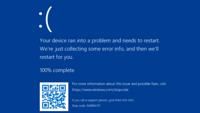
PoC Released for Windows Vulnerability That Allows Attackers to Cause Unrecoverable BSOD Crashes
A proof-of-concept (PoC) exploit has been publicly released for CVE-2026-2636, a newly documented vulnerability in Windows’ Common Log File System (CLFS) driver that allows any low-privileged, unprivi ... Read more
The following table lists the changes that have been made to the
CVE-2026-2636 vulnerability over time.
Vulnerability history details can be useful for understanding the evolution of a vulnerability, and for identifying the most recent changes that may impact the vulnerability's severity, exploitability, or other characteristics.
-
New CVE Received by df4dee71-de3a-4139-9588-11b62fe6c0ff
Feb. 25, 2026
Action Type Old Value New Value Added Description This vulnerability is caused by a CWE‑159: "Improper Handling of Invalid Use of Special Elements" weakness, which leads to an unrecoverable inconsistency in the CLFS.sys driver. This condition forces a call to the KeBugCheckEx function, allowing an unprivileged user to trigger a system crash. Microsoft silently fixed this vulnerability in the September 2025 cumulative update for Windows 11 2024 LTSC and Windows Server 2025. Windows 25H2 (released in September) was released with the patch. Windows 1123h2 and earlier versions remain vulnerable. Added CVSS V3.1 AV:L/AC:L/PR:L/UI:N/S:U/C:N/I:N/A:H Added CWE CWE-159 Added Reference https://www.fortra.com/security/advisories/research/fr-2026-001